I had a moment there When everything was clear And I knew without a doubt Where to go from here And then the shadows fell And you slipped away Into the darkness I could not hang onto you As hard as I tried As much as I was willing to sacrifice I lost my focus And stumbled around Turning circles in a mild panic Until I finally gave out When my eyes adjusted I stood there lost In the mad rush of confusion The distance had become enormous When I stabilized and my vision cleared The world was a different place I found myself looking At an unrecognizable horizon I blinked my eyes in disbelief It had happened so quickly Steeling myself to move I took a deep breath I felt my resolve solidify I had a moment there But I could not stay The world still needs to be navigated I must make my way You are comfortable and safe I must step away And continue this journey To its eventual end
Time I thought we had time I believed That we would find Joy in our days Magic in our nights I did not know Of the thief In your mind I would have cherished What we were privileged To share Instead I find myself alone Adrift on a river of time And I watch you drift by Without reason or rhyme There are moments I would like to know What you see From where you are Then I pause And turn away There are places I cannot go The knowledge Would lay me low Who could bear The terrible cost Of losing all you are Without recall
And it is Christmas I woke up alone The Chill in the air The silence of the room I looked around I miss you The Seasons roll on The Winter Solstice Has come and gone The longest night of the year The longest year of my life You are not here You are not gone I visit you often There is no one at home I stare into your eyes I want you to know No matter where you are Or where you go You do not have to remember I have not forgotten I am strong enough to carry The burdens you have dropped Until thatday comes That it doesn't matter Anymore.
Do you remember?

No

Such an empty place

To go

Who are you now

As the shadows close in?

What of those dreams,

Passions and plans?

Where are they now

As the sun sinks low

I see you.

Where did you go?

Do you remember?

No.

Theresa Smith
According to definition Hoarding is marked by an overwhelming desire to collect things and an inability to discard things that may seem to be useless to such a point that the collections start impacting a person’s life in a negative way. It is a compulsion that leads to accumulating a variety of items accompanied by an inability to discard these items without great distress.
From his childhood on my spouse was always a collector of things. He came into my life with an extensive collection of baseball cards and sports memorabilia. He had karate magazines and Harley Davidson t-shirts and ticket stubs from events he had attended throughout his life. He had things that held an emotional or ‘financial’ value. When we married these collections began to make their way into my home. My spouse had some peculiar personality quirks that those of us who knew and loved him attributed to his being an only beloved son, much wanted and spoiled by a mother who had no others and a father who was crippled and in a wheelchair.
My spouse was overprotected and catered to by all accounts. He was a mediocre student but a star athlete. He was a football hero in high school. He was the MVP baseball player with a batting average that made the newspapers and secured him a scholarship at a local college he wouldn’t make the grades to attend. He was well known, well liked and very charismatic. He was the center of his universe and made no apologies for it. He lived life on his terms and did as he pleased, he had several lovers, this was the 70’s and 80’s after all. He had two beautiful daughters whom he loved with all his heart. He volunteered with the local recreation center to coach youth sports for years.
When we met he was in his late 40’s and I was in my late 30’s. He was a dynamic karate instructor and devoted workout enthusiast. I was at the end of an abusive relationship, a single mother with 3 sons. One was grown and gone and two were in the home. We became friends as I struggled to get out of the destructive marriage and he coached my middle son in Pee Wee football and he coached me as I began my own martial arts journey. He was a narcissist with a big heart.
When we finally married after 10+ years of off and on dating, I found him to be a wonderful companion. After an overbearing, abusive marriage, his live and let live attitude was liberating. He was my anchor as he respected my need for a little independence. There were things he did, things I did and many things we did together. When he began moving his things to my home I quickly became overwhelmed by the volume of stuff. I tried to organize the stuff at first, but that quickly became impossible. The idea that this was hoarding didn’t happen all at once but gradually over the years as stuff came in and never went out.
When does collecting become hoarding? That line can become blurred to the point it is unrecognizable, then one day you wake up and look around the house and realize there is only a single place to sit down. Every surface area is piled up with stuff. One bedroom, the spare room, is so full of stuff the door doesn’t open all the way. When investigated the stuff turns out to be things like his daughter’s moldy Barbie Dolls and clothing they wore as small children, from the still usable to the torn, stained and mildewed. It is piles of magazines and newspapers. It is what anyone else would consider trash or junk. I had to stop my subscription to the local paper because the paper came in but never left. There were piles of newspapers everywhere.
How could you let your house get in this shape? How could I stop it? I made excuses….I stayed busy….I got to where we just slept at the house. We were busy people, If I was not at work we were on the go. We never ate at the house, we never relaxed at the house, We had things to do, places to go, people to see…
He ‘collected’ church bulletins, going down the pews and picking up any that other parishioners left behind. He did this at sporting events too, picking up the game programs left behind. Not only did he have every stitch of clothing he ever wore but he started going to thrift stores and buying other people’s clothing and tennis shoes. If it had a name brand on it, the size was irrelevant. He also developed a thing for ‘leather’ jackets…and would buy any he found at thrift stores. Football jerseys became a thing for a while…the player and team didn’t matter. Slowly, mounds of chaos sprang up all over the house. I would clean a space off and it would fill with new stuff. I would try to haul stuff off and this lead to a total melt down on his part. I tried slipping things into the garbage until he started going behind me and digging through the garbage to retrieve things he thought we should keep. I was told…just throw it out. He will get over it! These people didn’t have to live with the total emotional basket case that resulted in any attempts to clear things out. I got a storage shed for 100 dollars a month and hauled several loads there only to have him go and selectively bring things back every chance he got. I was slowly relegated to living out of tubs. I had two areas where I kept my things and had to constantly move his stuff out of that space. It just wasn’t worth the distress, panic, the anger and the hurt it stirred up when I made any move to clean up.
Denial is a huge state and I took up residence there. I made jokes about living in hoarders paradise but I wasn’t serious, not really…When he was diagnosed with Dementia and we began to assess his symptoms with his doctor, it turns out that hoarding is a big red flag. It had been slapping me in the face for a couple of years before his mental deterioration got to the point that other people were noticing it. By the time he was struggling with paranoia, hallucinations and the pending loss of independence, our compassionate doctor told me that the hoarding was indeed a red flag for psychosis associated with dementia, but at this stage, it was really inadvisable to try and do anything about it. After all, we had been living with it for years, to try and significantly change his environment while dealing with all the other issues would only make things worse for him. He was already under tremendous duress for the dementia, stressing him unnecessarily could cause his decline to worsen. There would be a time when cleaning up was all that was left to do. When we got there it would all be waiting for me.
Everyone’s journey through this dark terrain will be as unique as we are. How each of us handles what we experience will determine our overall well being. It is a hard thing. It is a painful thing. Sometimes, it is a desperately lonely thing. Hang on. Look for those tidbits of glory within the darkness. It will test you, and you will not always feel good about the results. You can’t help what your loved one is going through, all you can do is be there, support and love them. and hang on for the ride…no…it doesn’t end well…but you will get to decide how you pick up the pieces and where you go from there.
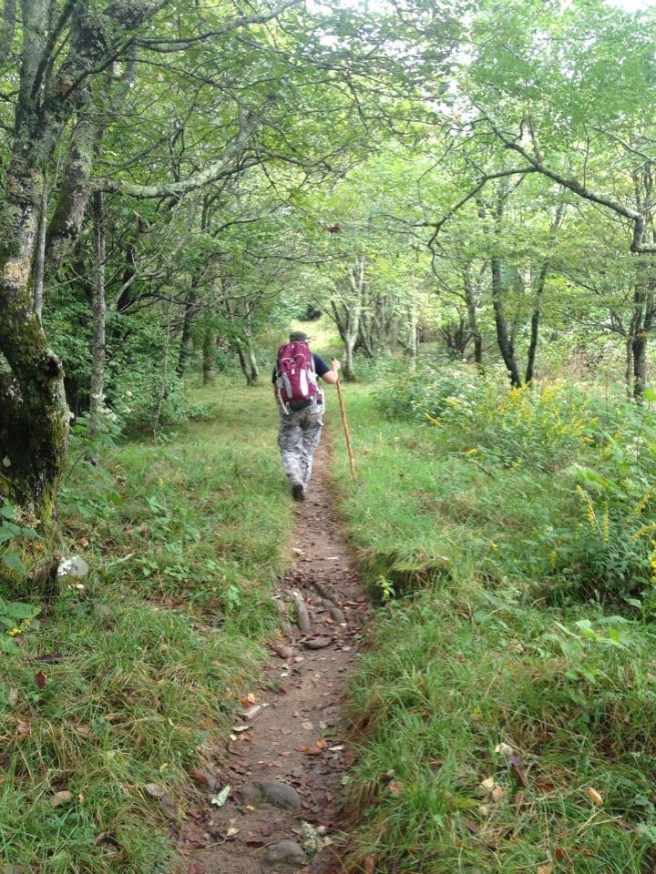
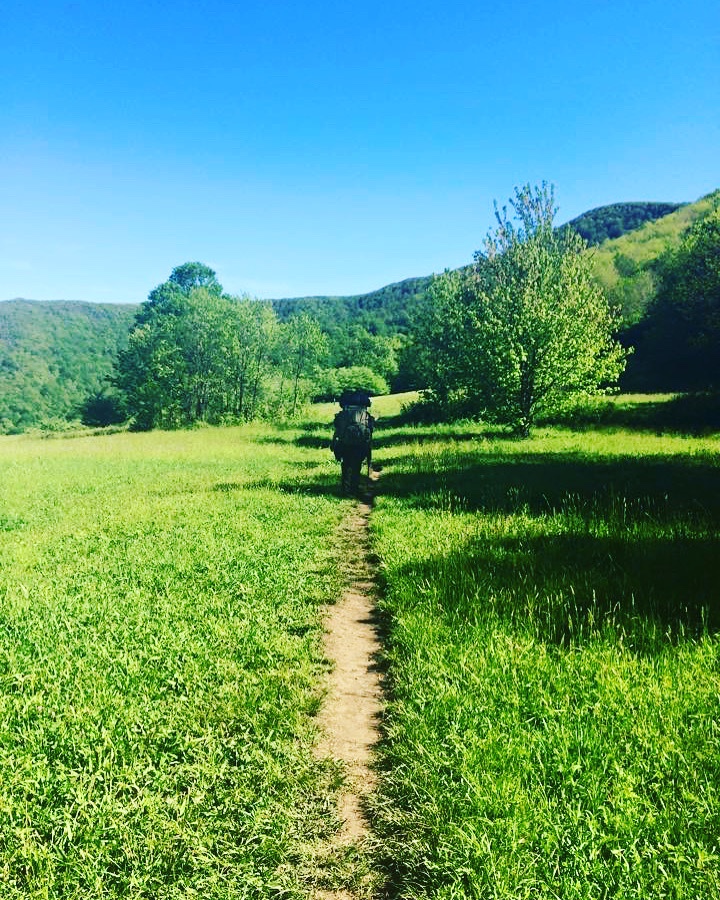
Trying to cope with the life changing diagnosis of dementia in a spouse, is an ongoing struggle. It’s like being on a long trail with someone. You can’t go back, and you can’t see what lies ahead. All you can do is keep walking. And as you go along, your partner is dropping things, necessary, needful things, that you can’t catch or pick up. All you can do is keep walking.
The pace slows as your partner loses mobility, and the questions keep popping up. What day is it? Where are we going? What are we doing? What day is it? What is today?
The thing that hits me hardest though is the fear. The fear throbs with a low hum in the background of day to day life. It is unspoken. It reveals itself in body language and in the confusion that marks every day. The changes in the ability or cognizant knowledge of how to deal with the things that occur in everyday life become more apparent as time passes. I have to do more and more to keep us on an even level keel. And each change is like a micro stab to the heart. Each loss is a permanent step down a dark path.
In the beginning, we noticed that he was having difficulty doing things he always did. We had to give up a side job teaching martial arts because he couldn’t deal with the students. He went from a compassionate, excellent encourager and coach to a grouchy, intolerant task master. He grew frustrated easily and began to accuse students of poor behavior even when it wasn’t true. We bowed out of teaching and learned of his diagnosis. The paranoia hit us hard, everyone was out to get him, Truck drivers on the interstate just wanted to run over and kill everyone else on the highway. Trailer park punks were harassing us in the middle of the night. People were going to steal his stuff.
He had always had a big heart for young people so when he started hating on extended family that was a shocking behavior to all of us. It wasn’t him… the ugly aggressive behavior and hallucinations and paranoia have been eased with medications.
Losing his independence has been hard on us. He was always one who preferred his own company and when he had to be with someone 24/7. We had to adjust our behavior and find a way to ensure he was in a more comfortable environment.
I have to remind myself often that he did not choose this. As his pace slows I have taken to holding his hand so I don’t run off and leave him. His mood often reflects my own, so I carry the burden of both our dispositions. Sometimes, I just can’t do it and end up paying an emotional debt as I have to settle him as well as my own emotional distress.
He doesn’t want to bathe or use deodorant. He doesn’t want to change clothes. He struggles working his smart phone. A big social media presence on his favorite topics before, now it is rare for him to find or comment. He can’t follow complicated dialog or story lines on TV. He is content watching shows he grew up with and baseball and football though he can’t tell you how the game is going. He used to know all the players and their stats. Now it’s a comforting familiar noise in the background.
He was a gym rat, going to the gym and working out was a major part of his life, now we go to the gym and sit in the sauna and steam rooms. He used to swim, now it’s a major deal to just get into the pool. And the changes keep on. It is a race of adaptations.
I have to totally release my expectations. My expectations of what he should be able to do and my expectations of myself, how I should deal with the challenges. They say a routine is best. I can’t give him that due to my work schedule. They say a lot of things. Each journey down this path is as unique as the people trodding it. Be easy on yourself and your partner on this trek. We already know it’s not going to end well.
If you have never dealt with a person who is hallucinating it is a shock to the system the first time it ever happens. Trying to figure out how to pacify someone who is upset over something that is not there is a no win situation. Having never dealt with this before, I tripped off down the logic and reality path that dead ends in total meltdown for the person who is hallucinating. It was not a good night.
We live at the end of a mile long gravel drive, there are large pasture fields between us and our nearest neighbors. Behind us is a wooded steep hill, belonging to a series of wooded ridges running up the landscape separating our valley from the one on the other side. There are no near neighbors behind us. The pasture fields in front and to the side of us are fenced with electric fences. We also have 7 dogs, 2 chihuahuas, 3 terriers, a catahoula, and a pit Bull mix. If anyone comes anywhere close the house is filled with the sound of dogs barking.
When my spouse insisted that trailer park punks were out in the yard, I argued with him. I pointed out that there was no one there. I went outside, he claimed they hid when the door opened. I told him the dogs weren’t barking, that if anyone were around the dogs would be barking. He said he didn’t know why the dogs wouldn’t bark at the trailer park punks and he grew more agitated with me because I wouldn’t believe him about the late night visitors. It went back and forth, his agitation growing with my frustration and fatigue. I did not know how to pacify my spouse. Little did I know at the time, but the trailer park punks were to become nightly visitors for the next several weeks.
After trying to handle my spouse’s hallucinations with calm honesty and logic and failing, I finally read up on hallucinations in dementia patients and discovered that playing along will usually defuse the situation. So off to plan B…
I went outside and yelled to scare ‘them’ off only to be told they hid until it was safe for them to continue with their odd harassment. Reflections of internal lights, like the lights on the coffee maker, became flashlights roaming the back hill behind the house. I found myself purchasing a Ring camera that lit up the front yard like a traveling circus. I could pull up the front yard on the phone and show him pictures to reassure him, only to be told that the miscreants were just out of camera range. I would be roused in the wee hours so I could hear non-existent voices conversing on the front porch, or a non-existent vehicle racing up and down the driveway.
I work rotating 12 hour shifts and many nights on my day shift rotation I would be wakened to investigate these capering punks in the yard, in the woods, or driving up and down the driveway…one night I took the catahoula on a leash up the trail into the woods behind the house. He kept looking over his shoulder at me, wagging his tail like, this is cool mom!!! I stopped about a quarter way up the steep hill and looked up at the thick canopy and asked myself, what I thought I was doing? Standing there in my pink crocs, and oversized pajamas, bed head, mostly blind without my lenses, dog on a leash at 2:30am, I realized it wasn’t working. I wasn’t accomplishing anything good.
I decided I would just stop trying to convince him one way or another. We were under the care of our primary physician, who had referred us to a very good psychiatrist. We were working out just where we were on this terrible journey. The last straw of this trying stage was the night I refused to get up and go deal with the trailer park punks and my spouse got his revolver and fired a couple of rounds up into the woods behind the house. Terrified, and riding an adrenaline rush I went out on the porch and I watched him strut around the house to tell me that he had taken care of it.
Our visits with the psychiatrist, who specializes in elder care, started us on the path of controlling the disruptive symptoms with medication. Once we got a couple visits in and the dosages adjusted, the trailer park punks stopped their nightly rampages.
The symptoms of this terrible illness vary with individuals. Hallucinations, agitation, aggression, personality changes, inability to make decisions, or take care of themselves, all mark the progression of dementia. No one set of coping skills is guaranteed to work when caring for a loved one. It becomes a loose adaptive process, because once you think you’ve got it…well, you don’t. Once you think you have a handle on it, it changes. The key is to find within yourself the understanding of what you are trying to accomplish and hang on for the ride.







 MrsSmithsLifeUnexpected